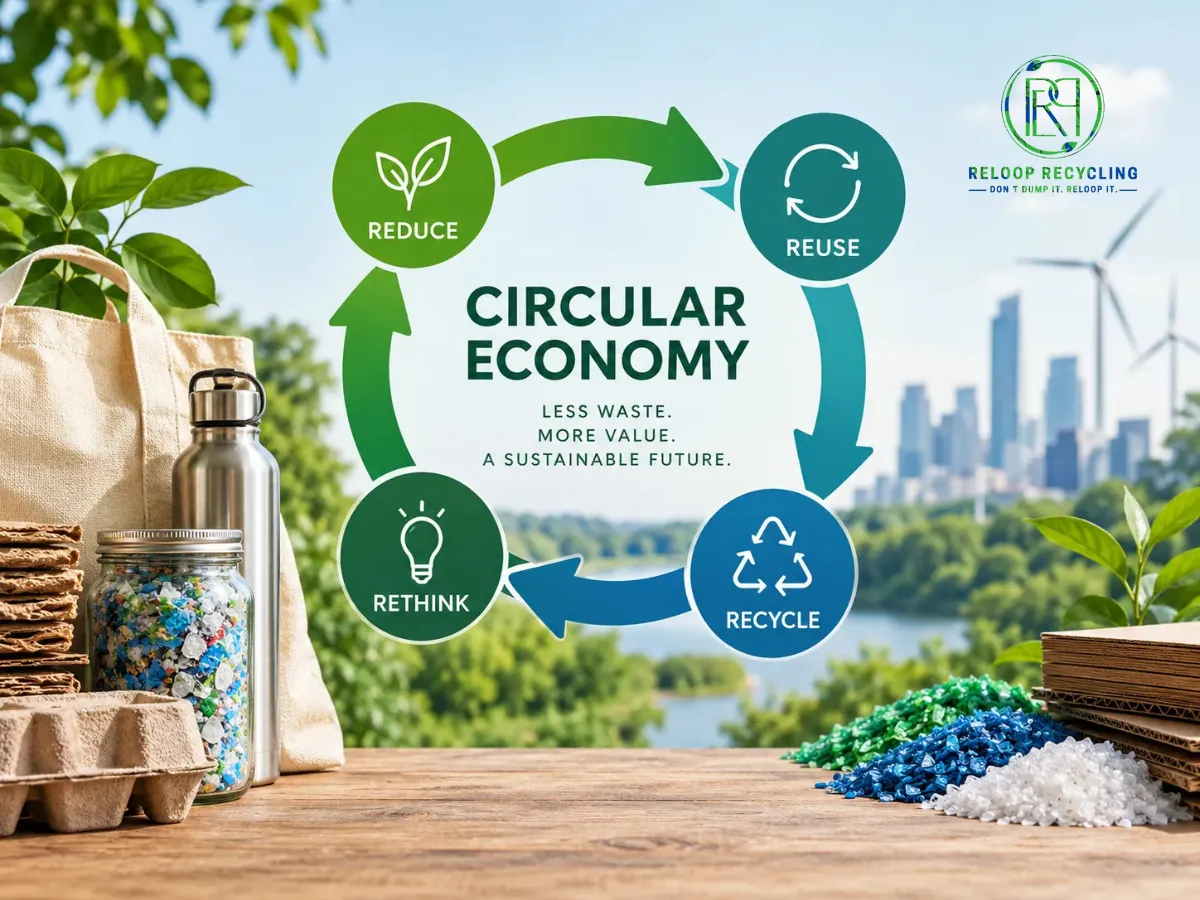
A circular economy is an approach to using resources more efficiently by keeping products, materials and equipment in use for as long as possible. Instead of following the traditional take-make-dispose model, where resources are extracted, products are manufactured, used and eventually discarded, a circular economy focuses on reducing waste, extending product lifespans and recovering valuable materials.
For businesses, this means rethinking how products are purchased, maintained, reused and managed at the end of their useful life. Equipment that is no longer needed by one department may be suitable for reuse elsewhere. Damaged products may be repairable, outdated IT assets may be refurbished, and materials from end-of-life products may be recovered through responsible recycling.
The goal is to preserve the value of products and resources for as long as practical while reducing unnecessary waste and demand for new raw materials.
How Does a Circular Economy Work in Practice?
Businesses can apply circular economy principles through several practical actions:
- Reduce: Avoid unnecessary purchases and minimise material consumption.
- Reuse: Extend the life of products by using them again or redeploying them within the business.
- Repair: Fix damaged equipment instead of replacing it immediately.
- Refurbish: Restore suitable used products to a functional condition.
- Recover and recycle: Extract useful materials from products that can no longer be reused economically or safely.
For example, when a company upgrades its IT infrastructure, its old laptops, servers and other equipment do not automatically need to become waste. Suitable devices can be assessed for reuse or refurbishment, while equipment that has reached the end of its useful life can be directed to appropriate recycling processes. Secure data destruction should also be completed where required before IT assets are reused or recycled.
This approach helps businesses make better use of existing resources, improve waste management practices and identify opportunities to recover value from unwanted materials.
A circular economy is not simply about recycling more. It is about preventing waste wherever possible, keeping products useful for longer and ensuring that materials are recovered responsibly when products reach the end of their life.
Linear Economy vs Circular Economy
The linear economy and circular economy represent two different approaches to using resources and managing waste. A linear economy follows a traditional take-make-dispose model, where raw materials are extracted, products are manufactured, used and eventually discarded. In contrast, a circular economy aims to keep products and materials in use for longer through reuse, repair, refurbishment and recycling.
For businesses, moving towards a circular economy means looking beyond the initial purchase and everyday use of products. It involves considering how equipment can be maintained, reused or recovered when it is no longer needed, helping reduce unnecessary waste and preserve the value of resources.
Comparison Table: Linear Economy vs Circular Economy
| Area | Linear economy | Circular economy |
|---|---|---|
| Product use | Use and discard | Use, maintain and extend lifespan |
| Equipment | Replace when outdated | Repair, upgrade or refurbish where suitable |
| Waste | Often treated as disposal | Assessed for reuse and recovery opportunities |
| Materials | Demand for new resources | Recover and reuse materials where feasible |
| Business focus | Short-term product use | Long-term resource value |
The Key Principles of a Circular Economy
A circular economy focuses on keeping products, equipment and materials in use for as long as possible while minimising waste and making better use of existing resources. For businesses, this means changing how they purchase, maintain, reuse and manage products at the end of their useful life.
Rather than relying only on recycling after waste has been generated, a circular economy prioritises preventing waste in the first place, extending product lifespans and recovering valuable materials wherever practical.
Here are six key principles businesses can apply to move towards a more circular approach.
1. Reduce Waste at the Source
Waste reduction starts with making informed purchasing decisions and avoiding unnecessary consumption. Businesses can review their material requirements, choose durable products, reduce excessive packaging and improve resource efficiency across their operations.
For example, organisations can purchase equipment based on actual requirements, reduce single-use materials and introduce better inventory management to prevent products from becoming obsolete or unusable.
Business benefit: Reducing waste at the source can lower material consumption, minimise disposal requirements and improve operational efficiency.
2. Reuse Products and Equipment
Reuse means using a product again instead of discarding it after its first use. It can also involve transferring equipment between departments or locations when it is no longer required by its original user.
For example, a company upgrading its IT systems may redeploy functional laptops, monitors and accessories to other employees rather than purchasing new equipment for every requirement.
Businesses can establish internal reuse programmes to identify available equipment, assess its condition and match it with new requirements.
Business benefit: Reuse helps extend product lifespans, reduce avoidable purchases and make better use of existing resources.
3. Repair Equipment to Extend Its Life
Repairing equipment can prevent premature disposal and reduce the need to replace entire products when only a component is damaged or malfunctioning.
Businesses can introduce preventive maintenance schedules, carry out routine inspections and repair suitable equipment before minor issues develop into major problems.
For example, replacing a faulty component or repairing a damaged laptop may allow the device to remain in productive use instead of being discarded.
Business benefit: Repair can extend equipment life, reduce replacement frequency and help businesses avoid unnecessary waste.
4. Refurbish Assets for Further Use
Refurbishment involves restoring used equipment to a suitable working condition through inspection, cleaning, component replacement, testing or other necessary improvements.
It is particularly relevant to IT equipment, electronics, machinery and other business assets that may retain value after their original use.
For example, used laptops may be inspected, repaired, upgraded and tested before being redeployed internally or prepared for resale, where appropriate.
Before IT equipment is transferred for reuse, businesses should also ensure that confidential information is securely erased or destroyed using an appropriate method.
Business benefit: Refurbishment can extend product lifespans, recover residual value and reduce demand for new equipment.
5. Remanufacture Products and Components
Remanufacturing involves restoring used products or components through a structured industrial process to meet defined performance and quality specifications. It goes beyond routine repair or basic refurbishment and may include disassembly, inspection, replacement of worn components, reassembly and testing.
For example, suitable industrial equipment, machinery components or electronic assemblies may be remanufactured for another service life, depending on their design and condition.
Not every product is suitable for remanufacturing. Feasibility depends on technical requirements, component availability, safety standards and economic considerations.
Business benefit: Remanufacturing can preserve the value embedded in existing products, reduce demand for certain new components and support more efficient resource use.
6. Recycle Materials Responsibly
When products can no longer be reused, repaired or refurbished economically or safely, recycling can help recover valuable materials and return them to appropriate production processes.
Businesses may generate different waste streams, including electronic equipment, batteries, cables, metals, plastics, textiles and packaging. These materials often require different collection, handling and processing methods.
For example, end-of-life electronic equipment can be sent to an appropriate recycling facility where recoverable materials may be separated and processed. Batteries should be handled through suitable channels according to their chemistry and applicable safety requirements.
Business benefit: Responsible recycling can reduce waste sent for disposal and help recover materials that might otherwise be lost.
How These Principles Work Together
These principles are most effective when applied as part of a coordinated resource management strategy. Businesses should first consider whether waste can be avoided and whether products can remain in use. Repair, refurbishment and remanufacturing can help extend product life, while recycling provides a route for recovering materials when further product use is no longer practical.
For example, when a business replaces its IT equipment, it can assess devices for internal reuse, repair suitable items, refurbish eligible assets, evaluate remanufacturing options where applicable and send remaining equipment through appropriate recycling channels.
The exact approach depends on the product, its condition, safety requirements and available recovery options.
Why the Circular Economy Matters for Businesses
A circular economy is not just an environmental concept. It is also a practical business approach that helps organisations use resources more efficiently, reduce avoidable waste and make better use of existing products and materials.
Traditional business models often follow a take-make-dispose pattern, where products are purchased, used and discarded when they are no longer needed. A circular approach encourages businesses to extend product lifespans, recover valuable materials and consider the full lifecycle of their resources.
By adopting circular economy practices, businesses can identify opportunities to improve operational efficiency, manage waste more effectively and support long-term sustainability goals.
1. Improve Resource Efficiency
Resources such as metals, plastics, water, energy and electronic components are essential to business operations. However, producing new products requires raw materials, energy and other resources. Using existing products and materials more effectively can help reduce unnecessary consumption.
Businesses can improve resource efficiency by maintaining equipment, repairing damaged products, reusing materials and choosing durable products that last longer.
For example, a company can extend the useful life of its IT equipment through maintenance and upgrades instead of replacing devices unnecessarily. This helps make better use of the resources already invested in those assets.
Business value: Better resource management can reduce material consumption, improve operational efficiency and help businesses manage exposure to changing resource prices.
2. Recover Valuable Materials
Many products that reach the end of their useful life still contain materials that can be recovered. Electronics, batteries, cables, metals and plastics may contain resources that can be returned to suitable production processes through appropriate recycling.
Instead of treating all unwanted products as waste, businesses can assess their potential for reuse, refurbishment and material recovery.
For example, end-of-life electronic equipment can be sent to an appropriate recycling facility, where recoverable materials may be separated and processed for further use. The materials recovered depend on the equipment, its composition and the recycling process used.
Business value: Material recovery can help preserve resource value, reduce reliance on virgin materials where recovered materials are suitable, and support more responsible end-of-life management.
3. Reduce Waste and Improve Waste Management
Waste generation can create additional handling, storage, transportation and disposal requirements. A circular economy encourages businesses to prevent waste before it occurs and identify better ways to manage products and materials that are no longer needed.
Practical measures include reducing unnecessary purchases, improving inventory management, reusing packaging, separating waste streams and arranging appropriate recycling.
For example, a business that separates batteries, electronic equipment, cables and general packaging can direct each stream towards a suitable handling and processing route rather than mixing everything together.
Business value: Better waste management can reduce avoidable disposal, improve material traceability and help organisations meet applicable environmental and operational requirements.
4. Identify Potential Cost Savings
Circular economy practices can create opportunities to reduce costs, although the results depend on the business, material type and implementation approach.
Repairing equipment may be less expensive than replacing it. Reusing materials can reduce purchasing requirements, while selling eligible used assets may help recover some of their remaining value. Better waste segregation can also help businesses identify materials suitable for recovery.
For example, before replacing an entire fleet of office laptops, a company could assess whether some devices can be upgraded or refurbished. Equipment that is no longer suitable for use can then be evaluated for responsible recovery or recycling.
Businesses should compare the costs of assessment, repair, refurbishment, storage, transport and processing against the potential savings or recovered value.
Business value: Circular practices can help control expenditure, reduce unnecessary purchases and uncover additional value in existing assets.
5. Improve Environmental Performance
The way businesses source, use and discard resources affects resource consumption, waste generation and environmental impacts. Circular economy practices can help address these challenges by extending product life, reducing unnecessary material demand and improving recovery.
The United Nations Environment Programme’s Global Resources Outlook 2024 reports that global extraction of natural resources has tripled over the past five decades. Without significant changes, resource extraction could rise by a further 60% by 2060 compared with 2020 levels. These findings highlight the importance of using resources more responsibly. Source: UNEP, Global Resources Outlook 2024.
Businesses can contribute by reducing waste, maintaining equipment for longer, selecting suitable reusable materials and ensuring end-of-life products are managed through appropriate recovery channels.
Business value: These actions can support sustainability objectives, improve environmental reporting and help organisations identify opportunities to reduce their environmental footprint. The actual benefits depend on the products, processes and recovery methods involved.
6. Build Business Resilience and New Opportunities
Dependence on newly extracted raw materials can expose businesses to supply disruptions, shortages and price fluctuations. Reusing products and recovering materials can provide additional options for managing resources.
Circular approaches can also create opportunities for repair services, refurbishment, resale, resource recovery and partnerships with specialist waste management providers.
For example, a business can establish a structured IT asset lifecycle programme that identifies equipment for reuse, refurbishment, resale or recycling. This can help the organisation manage assets more systematically while exploring opportunities to recover residual value.
Business value: Circular practices can support resource resilience, encourage innovation and create opportunities for more efficient business models.
How Businesses Can Start
Businesses do not need to transform every process at once. They can begin with a practical review of their existing operations.
- Assess current resource use: Identify the materials, products and equipment your business purchases and discards.
- Prioritise reuse and repair: Determine which products can remain in service for longer.
- Improve waste segregation: Separate materials according to their handling and recovery requirements.
- Work with appropriate partners: Identify service providers for asset management, secure data destruction and responsible recycling, as relevant.
- Measure progress: Track quantities reused, refurbished, recycled and sent for disposal.
- Review results: Use the data to identify improvements and set realistic targets.
How Businesses Can Implement Circular Practices
Implementing a circular economy does not require businesses to change every process at once. It starts with making better decisions about purchasing, using, maintaining and managing products throughout their lifecycle.
From selecting durable equipment to arranging responsible collection and recycling, businesses can introduce practical measures that extend product life, reduce avoidable waste and recover value from existing resources.
The following steps provide a practical framework for incorporating circular economy principles into everyday business operations.
1. Make Sustainable Purchasing Decisions
Circular practices begin before a product enters the business. Purchasing decisions influence how long equipment remains useful, how easily it can be repaired and what happens when it reaches the end of its service life.
Businesses can prioritise durable, energy-efficient and repairable products, consider refurbished equipment where suitable and evaluate whether existing assets can meet new requirements before purchasing replacements.
Practical actions:
- Assess actual business needs before buying new equipment.
- Choose products with reliable warranties, available spare parts and repair options.
- Consider refurbished or remanufactured products where appropriate.
- Evaluate durability, maintenance requirements and end-of-life options when comparing suppliers.
Example: Before purchasing new laptops for an entire department, assess whether existing devices can be upgraded or redeployed to meet some of the requirements.
2. Maintain Equipment to Extend Its Useful Life
Regular maintenance helps keep equipment functional and may prevent premature replacement. Businesses can establish maintenance schedules based on manufacturer recommendations, equipment condition and operational requirements.
Preventive maintenance can also help identify potential faults before they cause equipment failure or interrupt business operations.
Practical actions:
- Schedule regular inspections and servicing.
- Keep maintenance records for important equipment.
- Monitor equipment condition and performance.
- Train employees to identify and report faults.
- Replace worn components where appropriate.
Example: Regularly servicing industrial equipment and replacing worn components can help extend its useful life and reduce unnecessary disposal.
3. Repair Products Before Replacing Them
When equipment becomes damaged or stops working, replacement is not always the only option. Repairing a faulty component may restore functionality at a lower overall cost than purchasing a new product.
Businesses should assess the condition, repairability, safety and cost of each item before deciding whether to repair or replace it.
Practical actions:
- Introduce a process for reporting damaged equipment.
- Assess repair costs against replacement costs.
- Use qualified technicians for repairs where necessary.
- Evaluate the availability of spare parts.
- Record repaired items and return suitable equipment to service.
Example: A laptop with a faulty battery or damaged charging port may be repairable, allowing the business to continue using the device instead of discarding it.
4. Reuse and Redeploy Existing Assets
Equipment that is no longer needed in one department may still be useful elsewhere. Internal reuse helps businesses make better use of existing resources and reduce unnecessary purchases.
An organised redeployment process makes it easier to identify available equipment, assess its condition and match it with another department’s requirements.
Practical actions:
- Create an inventory of available and surplus equipment.
- Check whether other departments need the items.
- Verify the condition and suitability of equipment before transfer.
- Clean, test and prepare items for their next user.
- Maintain records of asset transfers.
Example: Monitors, keyboards and working laptops from an office relocation can be transferred to another department rather than purchased again.
5. Track Assets Throughout Their Lifecycle
Asset tracking helps businesses understand what equipment they own, where it is located, how it is being used and when it may need maintenance or replacement.
Without accurate records, usable equipment can remain forgotten in storage while new equipment is purchased unnecessarily. Tracking also supports better planning for reuse, refurbishment and end-of-life collection.
Practical actions:
- Maintain an up-to-date asset register.
- Record asset identification numbers, locations and ownership.
- Track purchase dates, maintenance history and condition.
- Record transfers, repairs and changes in status.
- Identify surplus, obsolete and end-of-life assets for assessment.
Example: An IT asset register can help a company identify unused laptops and servers before approving additional purchases.
6. Arrange Responsible Collection of End-of-Life Assets
When equipment can no longer be used effectively, businesses should establish a clear process for collection and appropriate downstream management.
Different products require different handling procedures. Electronics, batteries, cables, plastics, metals and other waste streams should be assessed and directed through suitable collection and processing channels.
Practical actions:
- Establish designated collection and temporary storage areas.
- Separate materials according to applicable handling and safety requirements.
- Maintain records of quantities and transfers.
- Use suitable, qualified collection and recycling providers.
- Check applicable regulatory and documentation requirements.
Example: A company replacing its IT infrastructure can arrange collection of obsolete computers and servers through an appropriate IT asset management or recycling provider.
7. Protect Confidential Information Through Secure Data Destruction
Electronic equipment may contain confidential business information, employee records, customer data or intellectual property. Before storage devices and IT assets are reused, resold or recycled, businesses should ensure that information is handled securely.
The appropriate method depends on the device, data sensitivity, intended next use and applicable requirements. Data sanitisation may be suitable for devices intended for reuse, while physical destruction may be necessary in other circumstances.
Practical actions:
- Identify devices that store confidential information.
- Establish a data sanitisation or destruction policy.
- Use appropriate, documented methods for each device.
- Maintain records or certificates where required.
- Confirm that data protection obligations are met before releasing assets.
Example: Before a company transfers used laptops for refurbishment, it arranges appropriate data sanitisation and verifies completion according to its security requirements.
Secure data destruction supports circular practices by helping businesses prepare eligible equipment for reuse without compromising information security.
8. Recycle Materials Through Appropriate Channels
Not every product can be repaired, reused or refurbished. When further use is impractical or unsafe, recycling can help recover materials and reduce the amount sent for disposal.
The recycling route should be appropriate to the material and product. Electronic equipment, batteries, cables, metals and plastics may require different processes, and recovery outcomes depend on the composition and condition of the materials.
Practical actions:
- Identify materials suitable for recycling.
- Keep incompatible waste streams separate.
- Use appropriate facilities and processing routes.
- Retain collection and recycling documentation.
- Track quantities collected and processed where data is available.
Example: End-of-life electronics can be directed to an appropriate recycling facility for material separation and recovery, while batteries are handled through suitable battery recycling channels.
9. Measure Results and Improve Continuously
Circular economy initiatives become more effective when businesses measure their progress. Tracking results helps organisations understand which practices are working and where further improvements are possible.
Useful indicators include the number of assets reused, quantities repaired or refurbished, materials recycled and waste sent for disposal.
Practical actions:
- Establish a baseline for current waste generation and resource use.
- Record quantities reused, refurbished, recycled and disposed of.
- Monitor equipment lifespan and replacement frequency.
- Review costs and recovered asset value where reliable data is available.
- Set realistic targets and review progress regularly.
Example: A business can compare its annual IT asset records to determine how many devices were redeployed, refurbished, recycled or disposed of, then identify opportunities to increase reuse in the following year.
Measuring Circular Economy Progress: Key Performance Indicators (KPIs)
Implementing circular economy practices is an important first step, but businesses also need to measure whether their efforts are making a difference. Key Performance Indicators (KPIs) help organisations track how effectively they reuse products, recover materials, reduce waste and extend the useful life of equipment.
Your Circular Economy Action Checklist
Take these practical steps to reduce waste, reuse resources and improve your business’s sustainability.
Conclusion: Moving from Waste to Value
A circular economy helps businesses move beyond the traditional take-make-dispose model and make better use of the resources they already have. By extending product lifecycles, encouraging reuse and repair, improving recycling practices, and tracking key performance indicators (KPIs), businesses can reduce waste, recover valuable materials, and make more informed sustainability decisions.
The opportunity is not just to manage waste more responsibly, but to recognise the value that can be recovered from unwanted materials and end-of-life assets. With the right processes and recycling partners, businesses can turn waste management into a practical part of their operational and environmental strategy.
Reloop Recycling supports businesses with practical waste management and recycling solutions across different waste streams, helping them manage materials responsibly and recover value wherever possible.
Ready to make better use of your resources and improve your waste management practices?
Don’t Dump It. Reloop It. Explore how Reloop Recycling can support your business with responsible collection, recycling, and resource recovery solutions.Conclusion: Moving from Waste to Value

Raju Lajwani
 Connect on LinkedIn